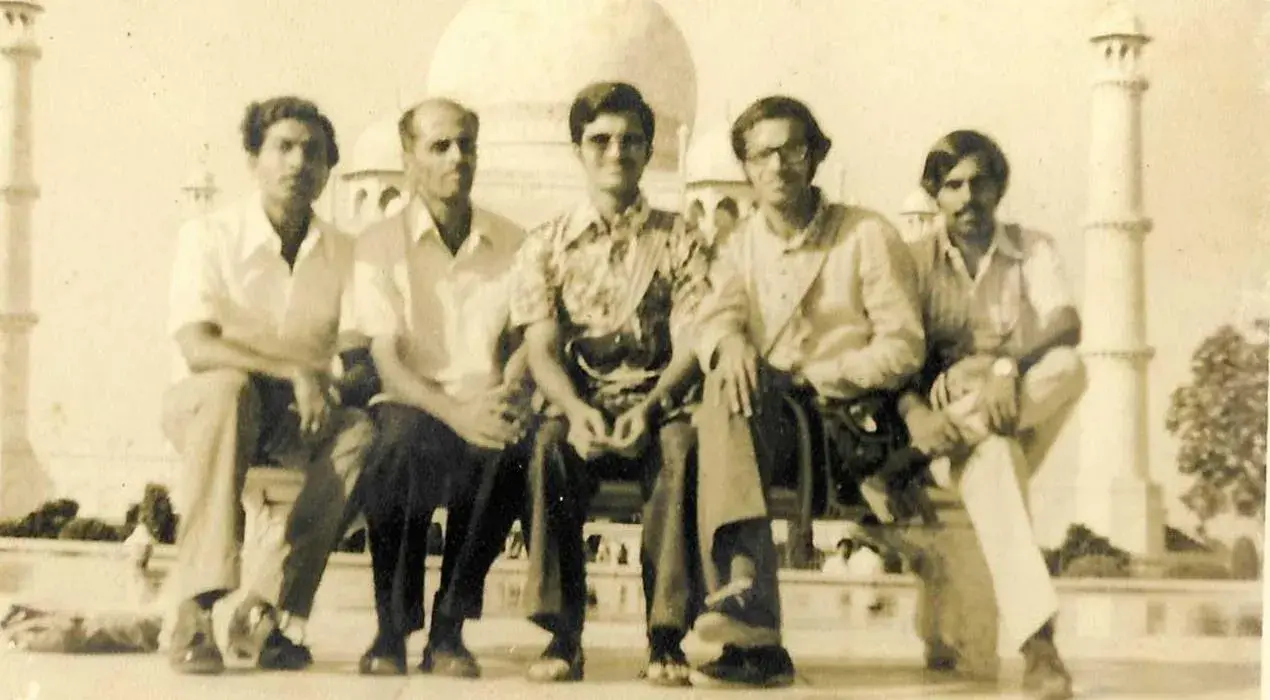
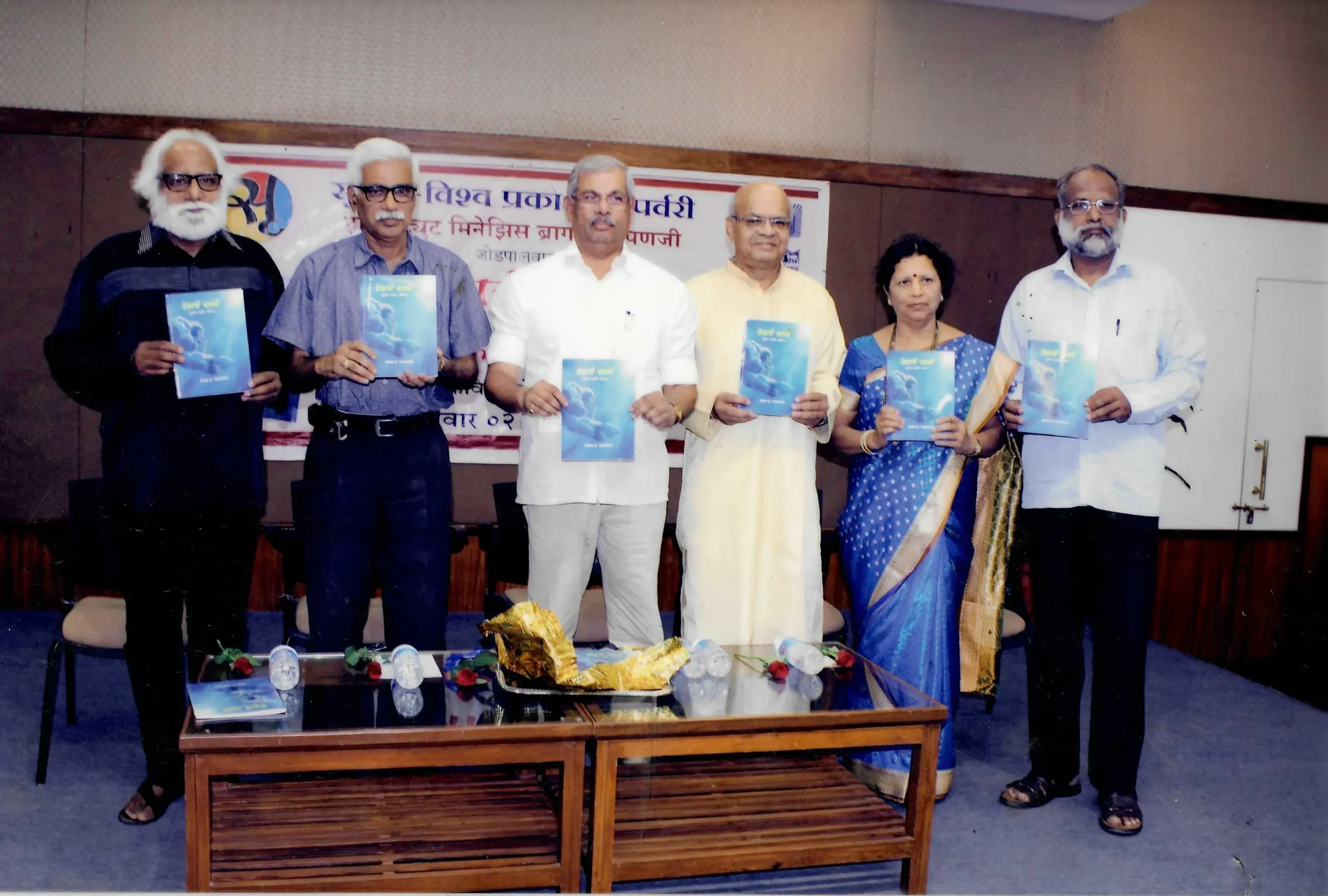
About Prakash Padgaonkar

Konkani literature in Goa could blossom only after the liberation of Goa from the Portuguese rule in 1961. Political liberation from the foreign yoke helped release the populace not only from psychological bondage; it also set free the creative energies of young writers, especially from the masses. One such creative mind that rose slowly but steadily on the Konkani literary
horizon was of Prakash Padgaonkar, a reputed poet and a much-respected individual in his own right. He assimilated within his poetic credo, the vision of the worldly as well as of the otherworldly, thereby nurturing within his creative range, the qualities of
the realistic poet and visionary bard; one firmly yoked to the sociopolitical reality of here and now; the other finely attuned to the spiritual and the mystical core of the higher plane of human consciousness and metaphysical existence.

Born in Mumbai in 1948, Prakash Padgaonkar spent his early years in Goa. He was barely a lad of fourteen, when he joined the famous Mauzo Studio in Panaji to seek out a living. This was cоincidentally the epicenter of the Konkani movement that spearheaded both literary as well as the political baby steps that Goa as well as Konkani needed to take to safeguard their interests and identity. Fortunately, Prakash Padgaonkar was drawn into the vortex of this resistance movement.

However, the urge for self-shaping was strongly manifesting itself in the young adolescent. Thus, the quest for growth and the thirst for knowledge soon drove him to a Night school. Prakash, as he is fondly known to his myriad friends, has not disappointed his well-wishers, readers and guides, then and now! Patience and perseverance seem to be the twin qualities that stand represented in the very initials of Prakash Padgaonkar’s name. That may perhaps explain not just his zeal and dedication as a poet, but also his unfaltering efforts to educate himself and evolve as an individual, capable of mature thought and expression. This attitude drew him to accept a humble job at All India Radio, Panaji, while it ensured he could continue his college education through evening classes at Dhempe College, Miramar. Nonetheless, his gaze may have been on his poetry, though! Never the one to turn away from his poetic Muse over the years, the deeply contemplative and philosophical Padgaonkar has been creatively active as a poet consistently for over four decades. He attracted critical attention even with his very first volume of poems Uzwadachi Pavlam (The Footsteps of Light), which appeared on the Konkani literary scene in 1976.

When he joined MMTC, his job firmly established his bond with the industrial and port city of Vasco, which was, in the words of Prof. M. S. Kamat, “a mini-India as one could find in this city people from all over the country.” The complexities of this port-city deeply influenced his writing and gave birth to his next volume of poems Vascoyan (The Lay of Vasco). This collection reveals his turning away from romantic self-absorption to realistic issues of societal concern and burning problems of the marginalized and the down-trodden.

His volumes of poems have been making their appearance in the literary domain at regular intervals. Soon, critical acclaim was reinforced by literary recognition, when his third collection of poetry Hanv Monis Ashwatthamo won him the prestigious Sahitya Akademi Award. In this volume, there is clear orientation towards modernist verse, even while the themes have a philosophical focus. Humanistic fervour and idealistic concern for human destiny are marked features of much of Padgaonkar’s poetry of this time. The next volume of verse was to continue with this preoccupation while it added the veneer of symbolist representation to modernist expression.

It can be seen that in the 1990s, Prakash Padgaonkar’s poetry assumes a visibly spiritual, almost mystical aspect. The influence of Sri Aurobindo’s philosophy and his concept of the super-mind seem to have made deep inroads into Padgaonkar’s vision. The unceasing yearning for evolution, the incessant urge for blending the mundane with the metaphysical, are palpable in much of his poetry from the nineties to now. But this aspiration for the higher reality has not divorced his poetic sensibility from the native context and experience. Padgaonkar’s poetry is deeply rooted in the Goan soil, folklore, and creative manifestation of Goan ethos.

Although Padgaonkar has undergone hard times in his younger days, it has not dented his spirit or coloured his approach to life with gloom and pessimism. In fact, his verve and optimism are the strong planks of his poetic experience, and his zest for life is amply reflected in his poetry.

If there is something that adversely affects Padgaonkar’s spirit and vitality of his verse, it is the anguish caused by the impact of

Inhuman industrialization and the impersonal attitude of contemporary humankind that undermines the universal human values he propagates adversely affect Padgaonkar’s spirit and the vitality of his verse. What pains him the most is the soulless marginalization and heartless alienation of the vulnerable. This sensitive approach and human empathy are the wellsprings of his creativity.

A very versatile poet, Padgaonkar’s poetry embraced a wide variety of subjects. M. S. Kamat has opined that it “ranges from ghettos to cosmos and from earthquakes to ballistic missile.” Whatever may be the theme of his poetry, the movement is always towards the spiritual. His flights of imagination spring from the mundane to the empirical, and therefore the poet is equally comfortable with matters pertaining to physics and metaphysics, light and darkness, hope and despair.

Here is a poet who writes with intense passion, deep intensity, and a sublime empathy. The search of self, the search within, are his driving forces. Yet his concern for fellow men and his deep-rooted humanism are the brilliant embellishments of his poetry.

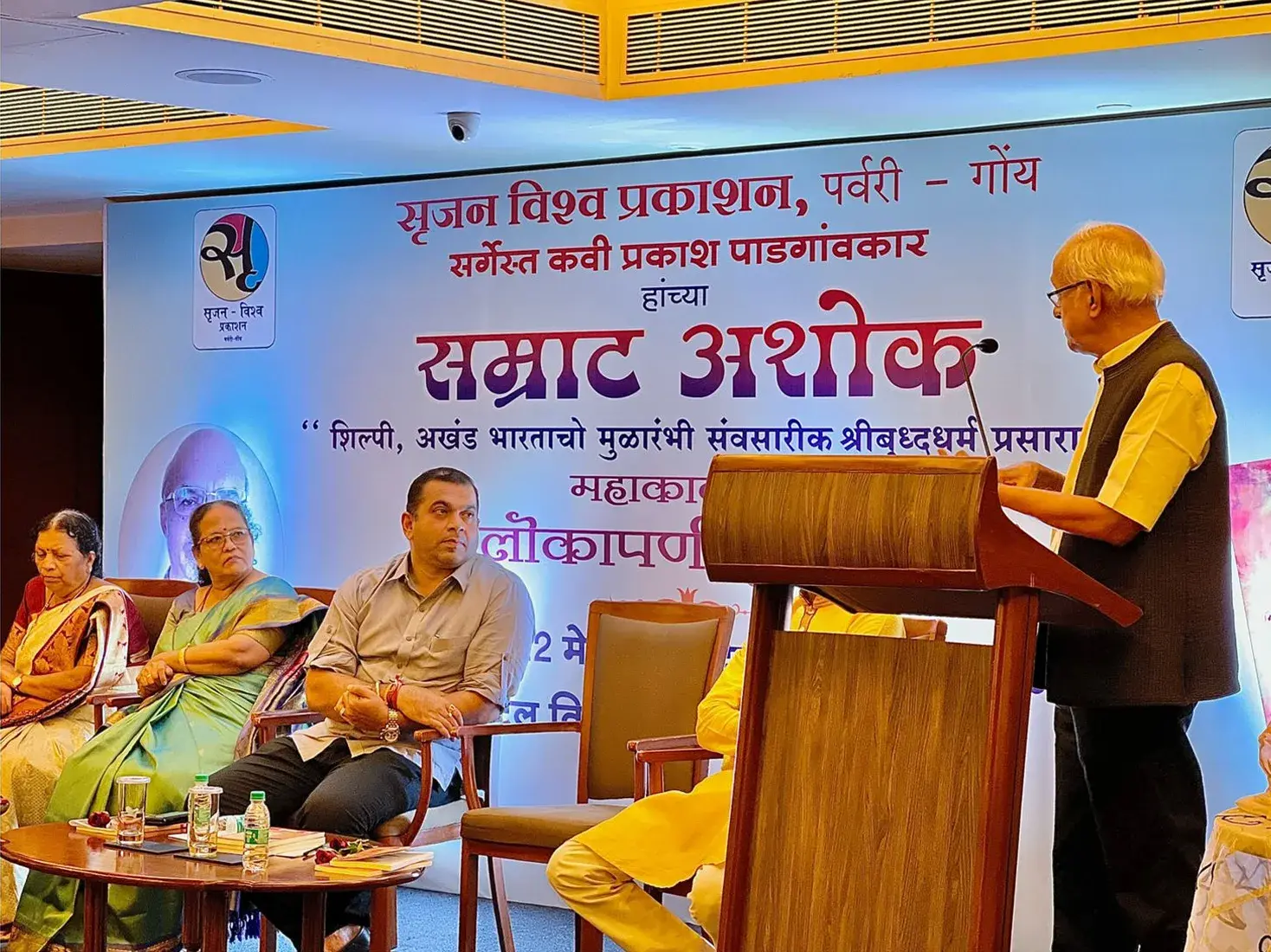
Padgaonkar, the poet, is fascinated by the many-splendored beauty of nature in its myriad forms, as also by that divine force which created the cosmos millions of years ago and ever since holds it in exquisite harmony and balance. Padgaonkar’s poetry is replete with a vision for a better future for mankind as much as with a sense of gratitude towards the creator of the universe.

In conclusion, it must be maintained that the initial promise that Padgaonkar’s poetry displayed has been realized in the trajectory of his creativity. As Suresh Amonkar reminds us, the prophetic words of the master-poet Bakibab Borkar that “Padgaonkar, with his humanist and contemplative approach to life, would emerge as a leading poet on the Indian literary scene” have been vindicated by the poetic journey of Padgaonkar. Today, he is not just the poet of the elite in their armchairs; his poems have found their way into popular anthologies and in the syllabi for secondary and graduate students. They have also been aired on All India Radio broadcasts.
 

A Chronology

1948 – Born on December 4

1962 – Started working in Mauzo Photo Studio, Panaji

1964 – Joined Night school in Panaji

1968 – Joined AIR, Panaji as Class IV Employee

1970 – Joined evening classes at Dhempe College, Miramar, Panaji

1974 – Joined MMTC Ltd., Vasco-da-Gama as Jr. Assistant

1977 – Konkani Bhasha Mandal Award to the book Izvaddachim Pavlam

1978 – Married to Leela Apa Bandekar

1979 – Kala Academy Goa Award to the book Vascoyan

1979 – Attended Poetry Workshop organised by Sahitya Akademi in Mumbai

1985 – Konkani Bhasha Mandal Award and Kala Academy Goa Award to the book Hanv Monis Ashwatthamo

1986 – Sahitya Akademi Award to the book Hanv Monis Ashwatthamo

1989 – Participated in the symposium of poets in the four-day International Seminar in New Delhi to mark the Birth Centenary of Pandit Jawaharlal Nehru and second century of French Revolution

1996 – Participated in multi-lingual National Symposium of Poets at New Delhi organised by All India Radio

2000 – Advisory Committee Member of All India Radio

2002 – President, Konkani Lekhak Sangh, Goa

2003 – Participated in South Indian Poets' Meet in Thunchan Memorial Trust, Tirur, Kerala

2003 – Chairman, Reception Committee of 16th Akhil Bharatiya Konkani Sahitya Sammelan held in Goa

2003 – Participated in the two-day gathering of poets from Western and North-Eastern parts of India at Shillong, Meghalaya organised by Sahitya Akademi

2005 – Dr T. M. A. Pai Foundation, Manipal, Best Book Award to the book Vhaunti Nhai Kallachi

2007 – Government of Goa presented Rajya Sanman

2008 – Retired as Senior Manager (Vigilance) from services of MMTC Ltd.

2010 – Government of Goa presented State Cultural Award

2012 – Renowned Konkani magazine Bimb presented Bimb Puraskar